If you have an interlock driveway in the GTA, you already know the struggle: weeds growing between pavers, white salt haze from winter, moss creeping in on shady spots, and that sinking feeling that your driveway looked way better the day it was installed.
You're not alone. Interlock is the most popular driveway surface in Vaughan, Markham, Richmond Hill, Brampton, and most GTA suburbs — and it needs different care than concrete. This guide covers everything: what it costs, how pros clean it, whether DIY works, and the one thing most homeowners skip that makes all the difference.
Why Interlock Driveways Get Dirty Faster Than Concrete
Interlock pavers have joints. Those joints are the source of 90% of your problems:
- Weeds grow in joints — seeds blow in, settle in sand, and germinate. One spring rain and you've got dandelions everywhere
- Moss and algae thrive in shaded joints — north-facing driveways and areas under trees turn green by June
- Ants mine the sand — they build colonies under pavers, removing the joint sand and creating settling
- Road salt dissolves polymeric sand — Toronto homeowners salt their driveways from November through April. Each application weakens the joint material
- Oil and fluid stains absorb into porous pavers — unlike sealed concrete, unsealed interlock absorbs automotive fluids within hours
Concrete driveways have none of these joint problems. That's why interlock needs more maintenance — but when it's properly cleaned and sealed, it looks significantly better than concrete.
How Much Does Professional Interlock Cleaning Cost in Toronto?
| Service | 2-Car Driveway (350-400 sq ft) | 3-Car / Large (500-700 sq ft) |
|---|---|---|
| Pressure wash only | $299 – $449 | $449 – $599 |
| + Polymeric sand re-fill | + $150 – $250 | + $200 – $350 |
| + Sealing | + $300 – $500 | + $500 – $750 |
| Full package (clean + sand + seal) | $650 – $1,100 | $1,000 – $1,600 |
The Right Way to Clean Interlock (5-Step Professional Process)
Step 1: Weed & Debris Removal
Pull visible weeds by hand or scrape. Blow off loose debris, leaves, and surface sand. Never skip this — pressure washing on top of debris pushes it into joints.
Step 2: Pre-Treatment
Apply cleaning solution to stained areas: degreaser for oil spots, mild acid for efflorescence (white haze), fungicide for moss/algae. Let it dwell 10-15 minutes.
Step 3: Controlled Pressure Washing
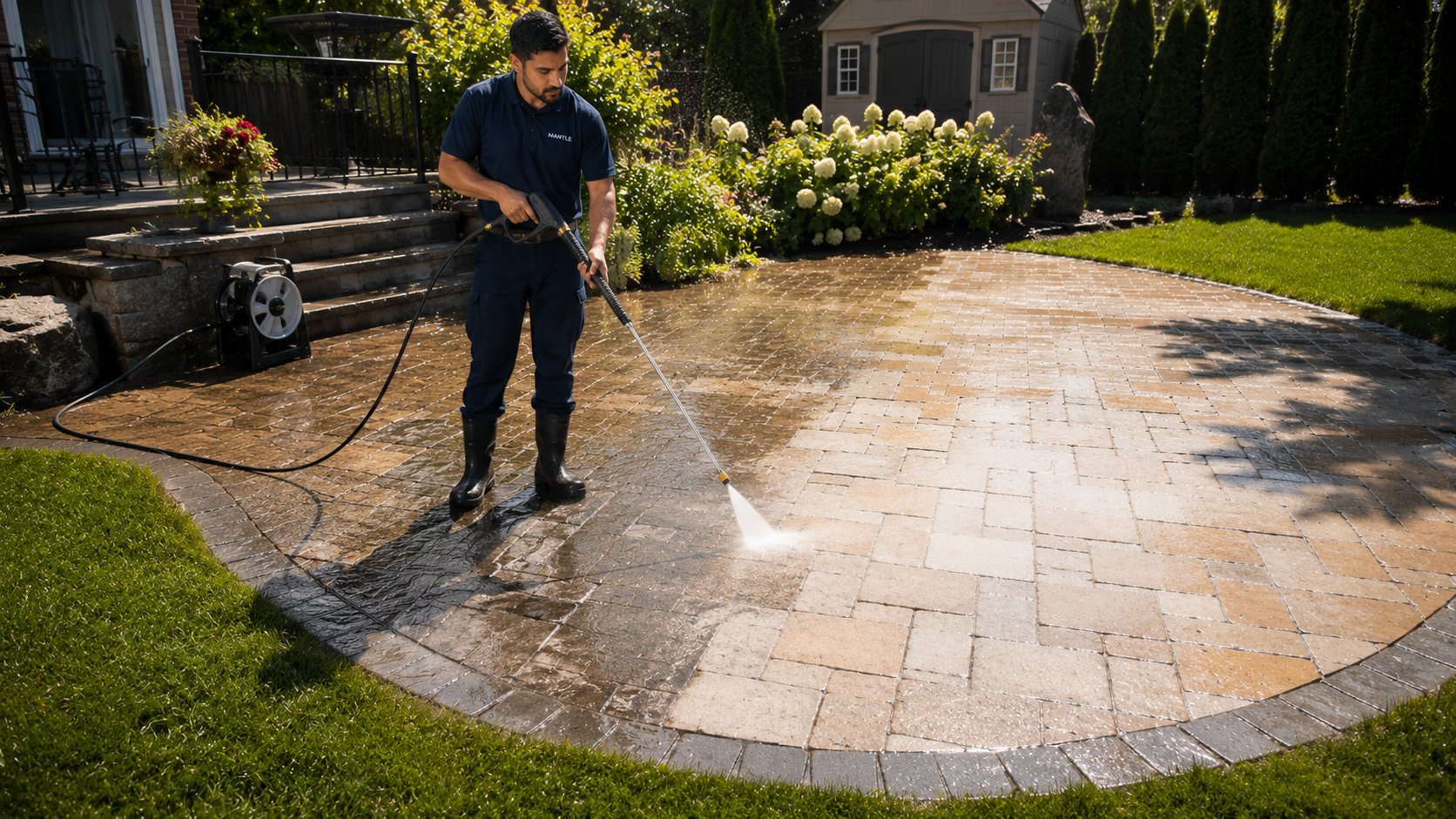
Use 1,500-2,500 PSI with a 25° or 40° fan tip. Keep 8-12 inches from surface. Even, overlapping passes. NEVER use a turbo/rotary nozzle on interlock — it etches the surface.
Step 4: Polymeric Sand Application
Once dry (24-48 hours), sweep polymeric sand into all joints. Compact with a plate compactor or hand tamper. Mist lightly to activate the polymers. This is the step that prevents weeds for 2-3 years.
Step 5: Sealing (Optional but Recommended)
Apply paver sealer in thin, even coats. Choose wet-look (glossy) or natural-look (matte). Sealer locks in sand, prevents stains, resists UV fading, and makes future cleaning easier.
DIY vs. Professional Interlock Cleaning

| Factor | DIY | Professional |
|---|---|---|
| Cost | $50-100 (rental + sand) | $299-1,100 |
| Time | Full weekend | 3-5 hours |
| Equipment | Rental pressure washer | Commercial-grade, correct tips |
| Risk of damage | High (wrong pressure, wrong tip) | Low (experienced operator) |
| Polymeric sand | Usually skipped or done wrong | Included, properly compacted |
| Sealing | Usually skipped | Available as add-on |
| Results longevity | 3-6 months | 1-3 years |
| Efflorescence removal | Rarely addressed | Pre-treated with proper chemicals |
Our honest take: If your driveway just needs a light clean and you have experience with pressure washers, DIY can work. But if you have weed problems, oil stains, moss, or efflorescence — or if you want it to last longer than a few months — professional cleaning with polymeric sand is worth every dollar.
The Efflorescence Problem (That White Haze)
If your interlock pavers have a white, chalky haze — that's efflorescence. It's calcium deposits leaching from the concrete in the pavers. It's extremely common on:
- New driveways (under 3 years old)
- Driveways exposed to road salt
- Areas with poor drainage where water pools
Efflorescence won't come off with water alone. It requires a mild acid treatment (phosphoric or muriatic acid diluted correctly) before pressure washing. Most DIY homeowners skip this step, which is why their driveway still looks hazy after cleaning.
Best Time to Clean Interlock in Toronto
| Timing | Rating | Why |
|---|---|---|
| Late April – May | ⭐ Best | Salt is gone, weeds are small, warm enough for sealer to cure |
| June – August | ✅ Good | Warm = fast drying. Sealer cures perfectly. May need to work around BBQ season |
| September – October | ✅ Good | Before leaves fall, warm enough for sealer. Great pre-winter protection |
| November + | ❌ Too late | Too cold for polymeric sand and sealer to cure properly |
| March – early April | ⚠️ Too early | Ground still thawing, salt still on surface, too cold for sealer |
How to Prevent Weeds Between Pavers
Weeds between interlock pavers are the #1 complaint from GTA homeowners. Here's what actually works:
- Polymeric sand (the real solution) — fills joints with a sand that hardens when wet. Weeds can't root through it. Lasts 2-3 years before needing a top-up. This is the single most effective weed prevention
- Paver sealer — locks in the polymeric sand and adds another barrier. Combined with poly sand, you'll see virtually zero weeds
- Vinegar spot treatment — household vinegar (5% acidity) kills existing weeds on contact. Won't prevent new ones, but good for maintenance between professional cleanings
- Boiling water — kills weeds and roots. Simple, free, non-toxic. Good for small areas
- Prevention > treatment — clean and re-sand every 1-2 years and you'll never have a serious weed problem
Interlock Maintenance Schedule for GTA Homeowners
| Task | Frequency | DIY or Pro? |
|---|---|---|
| Sweep debris | Weekly (spring-fall) | DIY |
| Spot-treat weeds | As needed | DIY (vinegar) |
| Professional clean + re-sand | Every 1-2 years | Pro recommended |
| Re-seal | Every 2-3 years | Pro recommended |
| Check for settling/shifting | Spring (after frost) | DIY (visual) |
| Oil stain treatment | Within 24 hours of spill | DIY (kitty litter + degreaser) |
Frequently Asked Questions
Can you pressure wash interlock pavers without damaging them?
Yes — with the right pressure (1,500-2,500 PSI), the right tip (25° or 40° fan), and proper distance (8-12 inches). The damage happens when people use turbo nozzles or hold the wand too close. Professional cleaning eliminates this risk.
How long does polymeric sand last?
2-3 years in the GTA, depending on traffic and salt exposure. Driveways with heavy winter salting may need top-ups every 1-2 years. Walkways and patios with less traffic can go 3+ years.
Should I seal my interlock driveway?
If you want maximum longevity and the easiest maintenance: yes. Sealing prevents stains, locks in polymeric sand, resists UV colour fading, and makes future cleaning much easier. It's especially worth it for oil-prone driveways and areas with heavy foot/vehicle traffic.
What causes pavers to shift or settle?
Poor base preparation (usually from original installation), tree root growth, ant mining, or erosion from clogged gutters dumping water onto the driveway edge. If you notice settling, address the cause before re-leveling — otherwise it'll happen again.
Can you clean coloured or stamped interlock?
Yes. Coloured pavers actually benefit most from cleaning — removing the surface film reveals the original vibrant colour underneath. Sealing after cleaning preserves that colour against UV fading.
Get Your Interlock Driveway Professionally Cleaned
Free estimates back within 2 hours. Clean + sand + seal packages available.
Get Free Estimate →