The #1 most asked question in exterior cleaning: "Do I need power washing or pressure washing?" The answer for 95% of Toronto homeowners: pressure washing (cold water) is all you need. Here's the complete breakdown so you can make an informed decision — and avoid being upsold.
The Only Difference
| Feature | Pressure Washing | Power Washing |
|---|---|---|
| Water temperature | Cold (ambient) | Heated (140-310°F / 60-155°C) |
| PSI range | 1,500-4,000 PSI | 1,500-4,000 PSI |
| Cleaning mechanism | Mechanical force (water impact) | Mechanical force + thermal dissolution |
| Best for | Dirt, dust, salt, mildew, paint prep | Grease, oil, sap, heavy biological |
| Equipment cost | $300-$1,500 (homeowner) / $2K-$5K (pro) | $2,000-$10,000+ (pro only) |
| Residential use | 95% of all jobs | 5% — oil stains, heavy grease |
| Average cost (pro) | $150-$350 (driveway) | $250-$500 (driveway) — premium for heat |
When You Actually Need Hot Water (Power Washing)

- Oil stains on concrete: Motor oil, hydraulic fluid, transmission fluid — hot water emulsifies oil molecules, lifting them from concrete pores. Cold water pushes oil around but doesn't dissolve it. If your driveway has significant oil spots, hot water is 3-5x more effective.
- Commercial grease: Restaurant exhaust hoods, commercial kitchen areas, gas station pads — these require heat to dissolve baked-on grease.
- Heavy tree sap: Hardened sap on stone or concrete softens with heat, making removal easier without excessive pressure that could damage surfaces.
- Sanitization: Healthcare facilities, food processing areas, and surfaces requiring bacterial kill benefit from the heat component.
When Cold Water (Pressure Washing) Is Better
- Wood surfaces (deck, fence): Hot water can warp and damage wood fibres. Always use cold water on wood at appropriate PSI (500-1,500).
- Vinyl siding: Heat can soften and deform vinyl. Cold water at moderate pressure (1,000-1,500 PSI) is correct.
- Painted surfaces: Heat accelerates paint softening and can cause bubbling. Cold water protects paint integrity.
- Interlock pavers: Hot water can melt polymeric sand in the joints. Cold water preserves the jointing material.
- Asphalt: Heat softens asphalt. Only cold water for driveways with asphalt surfaces.
What About Soft Washing?
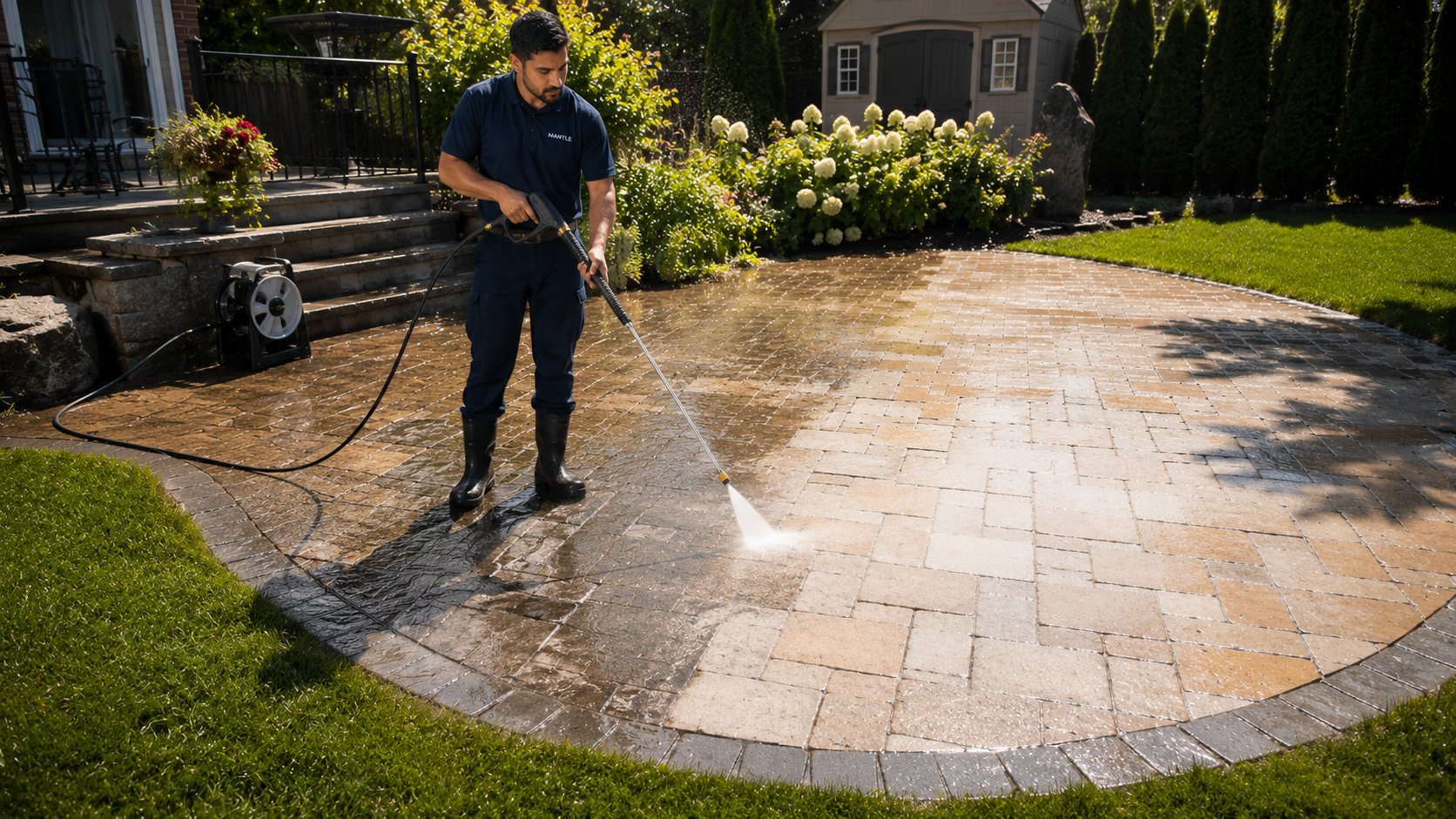
Soft washing is a third method — low pressure (under 500 PSI) with cleaning solutions (typically sodium hypochlorite/bleach-based). Used for: roofs, delicate siding, stucco, and surfaces where high pressure would cause damage. MANTLE uses soft washing for appropriate surfaces and pressure washing for hardscapes. Learn about soft washing →
The Right Method for Every Surface
Professional pressure washing. Surface-matched PSI. Honest about what you need. No upselling.
Get Free Estimate →Pressure Washing · Mistakes to Avoid · Soft Washing · All Posts