TL;DR
Pressure washing = high-pressure cold water. Used for most residential cleaning.
Power washing = high-pressure HOT water. Used for heavy grease/industrial cleaning.
Soft washing = low-pressure + cleaning solution. Used for delicate surfaces (siding, roof, interlock).
For your GTA home, you almost certainly need pressure washing or soft washing — not power washing.
The Three Methods Compared
Pressure Washing
- Cold water
- 1,500 – 4,000 PSI
- No chemicals required
- Best for: concrete, stone, brick
- GTA use: driveways, walkways, patios, retaining walls
Power Washing
- Heated water (60-90°C)
- 1,500 – 4,000 PSI
- Dissolves grease/oil
- Best for: industrial, commercial
- GTA use: restaurant patios, garage floors, oil stains
Soft Washing
- Low pressure (<1,000 PSI)
- Cleaning solution does the work
- Gentle on surfaces
- Best for: siding, roof, interlock, wood
- GTA use: house wash, vinyl, stucco, heritage brick
Which One Does Your Home Need?

| Surface | Best Method | PSI Range | Why |
|---|---|---|---|
| Concrete driveway | Pressure washing | 2,500 – 3,000 | Hard surface handles high pressure |
| Interlock driveway | Soft wash / Low pressure | 1,200 – 1,800 | High pressure destroys polymeric sand |
| Vinyl siding | Soft wash | 500 – 1,000 | High pressure forces water behind panels |
| Brick (newer) | Pressure washing | 1,500 – 2,500 | Strong mortar handles moderate pressure |
| Brick (heritage) | Soft wash only | Under 800 | Old mortar crumbles under pressure |
| Stucco | Soft wash | 500 – 1,000 | Pressure can crack and chip stucco |
| Wood deck | Soft wash / Low pressure | 800 – 1,500 | High pressure splinters wood fibres |
| Roof shingles | Soft wash only | Under 500 | Pressure strips granules from shingles |
| Stone walkway | Pressure washing | 2,000 – 3,000 | Natural stone is durable |
| Fence (wood) | Soft wash | 800 – 1,200 | Prep for staining; don't damage wood |
| Oil stain (concrete) | Power washing (hot) | 2,500 – 3,500 | Heat dissolves petroleum |
Why "Power Washing" Companies Usually Mean Pressure Washing
In everyday conversation — and in Google searches — most people use "power washing" and "pressure washing" interchangeably. When a GTA homeowner searches "power washing near me," they mean regular pressure washing. Very few residential jobs actually need heated water.
When you DO need actual power washing (hot water):
- Heavy oil/grease stains on concrete (mechanic's garage, commercial kitchen)
- Chewing gum removal from sidewalks
- Industrial equipment degreasing
- Restaurant patio grease buildup
When you DON'T need hot water (which is 99% of residential work):
- Road salt removal → cold water at 2,500+ PSI works perfectly
- Mildew/algae → soft wash solution kills it; heat not needed
- Dirt/mud → water pressure alone removes it
- Tree sap → solvent pre-treatment + cold pressure
What MANTLE Uses
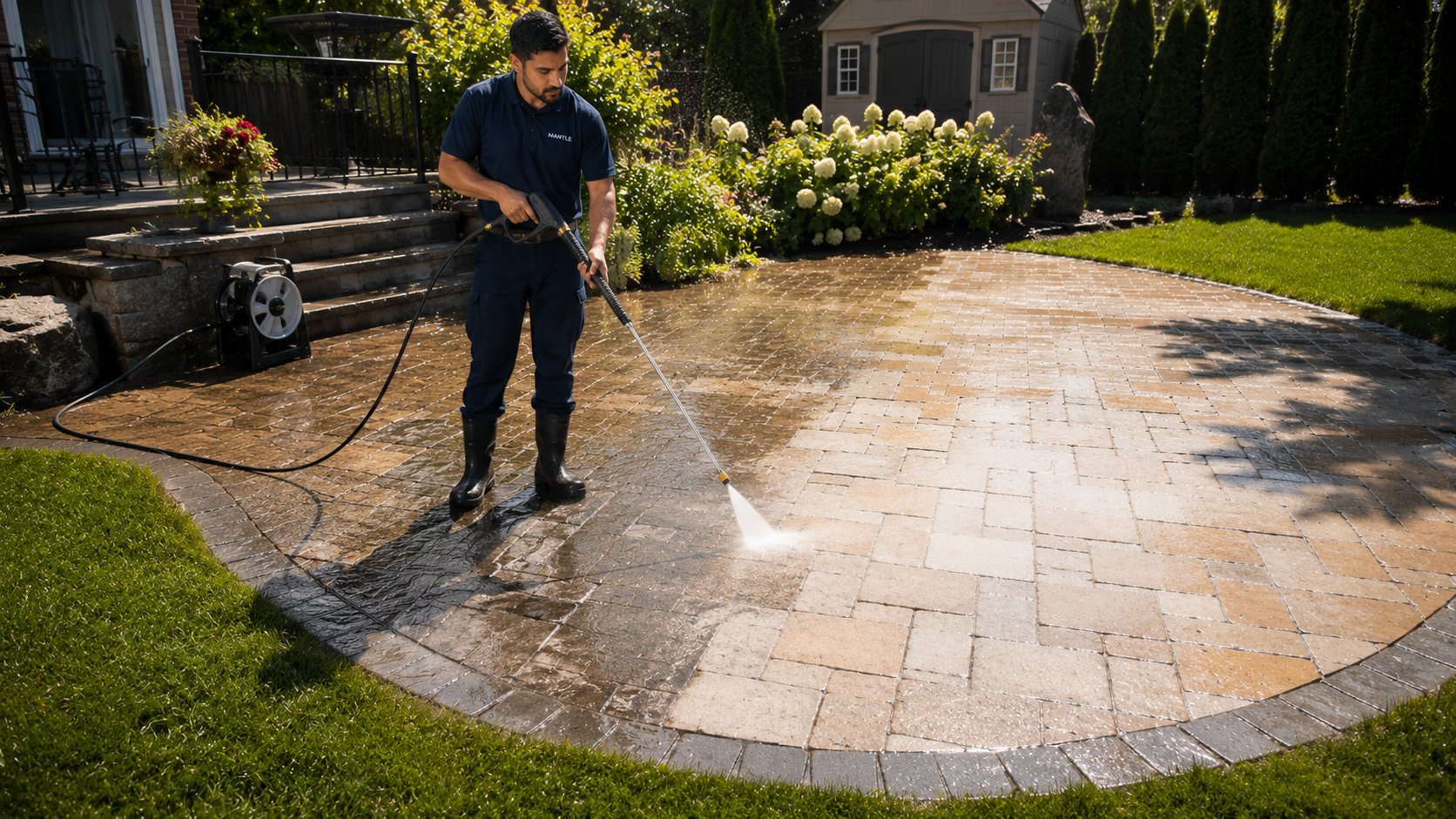
We use all three methods — matched to each surface on your property:
- Concrete driveways and walkways: Pressure washing at 2,500-3,000 PSI with surface cleaner attachment (even, streak-free results)
- Interlock pavers: Controlled low-pressure at 1,200-1,800 PSI + polymeric sand re-application
- House wash (siding/stucco): Soft wash — low pressure + biodegradable cleaning solution
- Heritage brick: Soft wash only — zero risk to mortar joints
- ClearCoat™ final rinse: Purified water rinse on all surfaces to prevent mineral deposits
You don't need to know which method your home needs — we assess every surface and apply the right technique automatically. One call, one quote, all methods included.
We'll Use the Right Method for Every Surface
Pressure wash. Soft wash. Surface-matched PSI. ClearCoat™ purified water rinse. One call covers it all.
Get Free Estimate →Pressure Washing Prices 2026 · Is It Worth It? · Soft Washing · All Posts