The short answer: late May through June, or September. Those are the sweet spots in Ontario's climate where temperature, humidity, and drying conditions line up perfectly for driveway sealant. Everything else is a compromise. Here's why — and what happens if you seal at the wrong time.
The temperature rule (non-negotiable)
Driveway sealant — whether asphalt-based, acrylic, or polymeric — needs the air and surface temperature to be above 10°C (50°F) during application and for at least 24 hours afterward. Below that, the sealant won't cure properly and will peel or flake off within months.
The upper limit matters too. Sealing on a 35°C scorcher causes the sealant to dry too fast on the surface while still liquid underneath — creating a brittle skin that cracks under traffic. Best results happen between 15°C and 28°C.
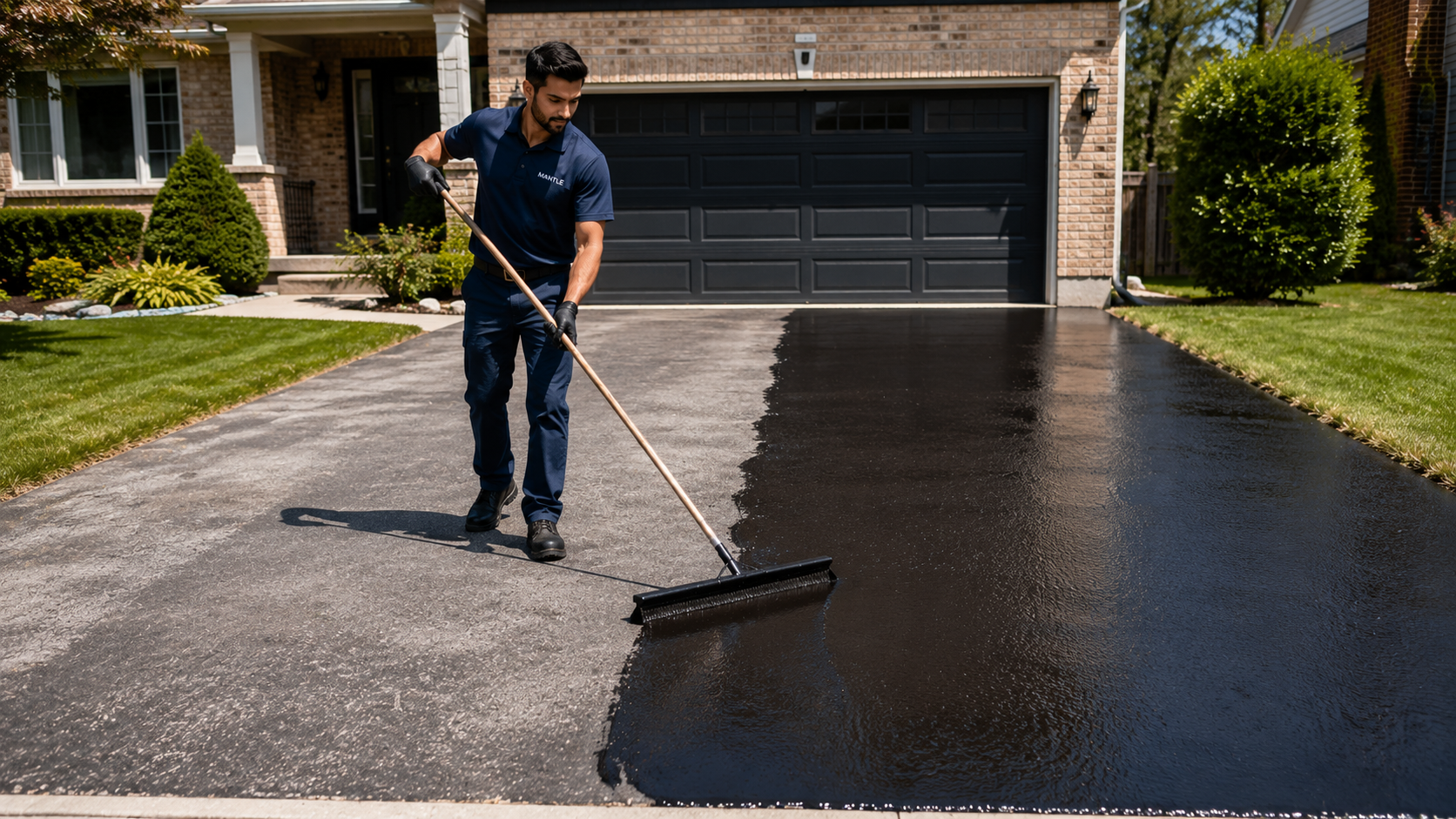
Season-by-season breakdown for Ontario
Late May – June
Temps consistently above 15°C, lower humidity than summer, long daylight hours. Ideal. Book early — this window fills up fast.
September
Post-summer heat, dry conditions, temperatures still well above 10°C. Excellent window, especially for asphalt. Gives sealant the whole winter to cure before spring freeze-thaw.
July – August
Works fine, but peak heat days (30°C+) should be avoided. Early morning application helps. Book for a mild, overcast day if possible.
Early October
Risky — temps can drop below 10°C overnight. Check the 48-hour forecast carefully. Late October is generally too late in Toronto.
November – March
Too cold. Sealant won't cure and will fail. No reputable company will seal a driveway in these months.
Before or after rain
The surface must be completely dry. Wait 48 hours after rain, and check the forecast for 24 hours post-application.
Why timing matters for GTA driveways specifically
Toronto and the GTA have one of the harshest freeze-thaw cycles in North America. A typical winter brings 60–90 freeze-thaw events — water seeps into cracks, freezes, expands, and widens them. A well-timed sealant application in September gives the product 6+ months to fully cure before that cycle begins, maximizing its effectiveness.
Spring sealing (May–June) protects through the hot cracking months of summer and the first fall freeze. Either window works — the key is not sealing too late in fall.
What if it rains after I seal?
If rain hits within 4–6 hours of application, the sealant can wash away or mottle. After 24 hours, a passing shower won't cause permanent damage but may leave water marks if curing isn't complete. After 48 hours, it's fully safe.
Every MANTLE booking checks the 48-hour forecast. We won't show up if there's meaningful rain expected — we'll reschedule at no charge.
How often should you seal in Ontario?
Asphalt driveways in Toronto's climate should be sealed every 2–3 years. More often than that can actually cause buildup and peeling. Interlock typically needs sealing every 3–5 years. A good visual indicator: when water no longer beads on the surface, it's time.
Ready to book your driveway sealing?
Free quotes for Toronto & the GTA. Most jobs completed same week.
Get Free Estimate Call (437) 494-8446