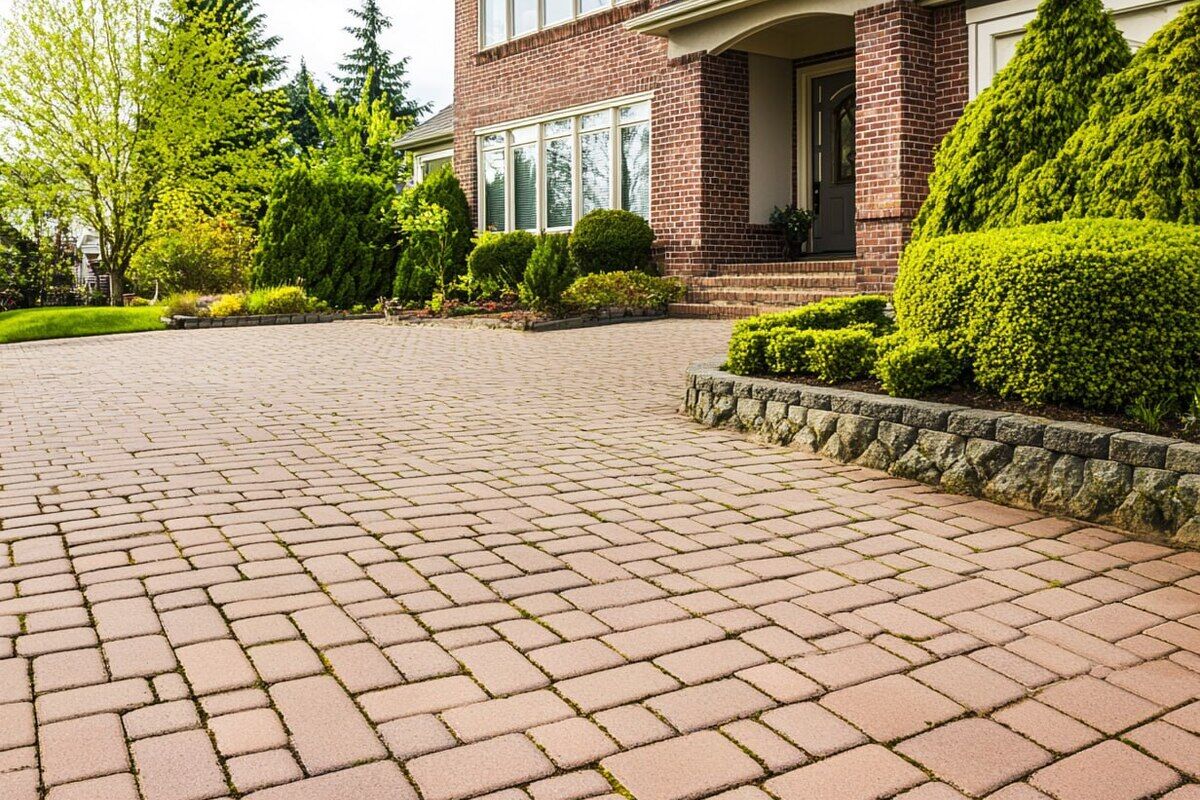
Your driveway takes more punishment than any other surface on your property. Salt from winter roads, UV from summer sun, oil drips, freeze-thaw cycles — all of it adds up. Most homeowners notice the damage only after it's too late: cracks wide enough to lose a phone in, weeds pushing through the surface, chunks of asphalt breaking off near the edges.
Driveway sealing is the single most cost-effective thing you can do to stop that deterioration. Here's what Toronto homeowners actually need to know about it.
Why GTA driveways take such a beating
Toronto sits in a climate zone that cycles through extreme freeze-thaw dozens of times each winter. Water gets into the pores of your asphalt or between your interlock pavers. When it freezes, it expands. When it thaws, it contracts. Do that 30 or 40 times between November and March, and the structural damage compounds fast.
Add road salt — which accelerates the breakdown of asphalt binders and corrodes concrete — and UV from summer sun, which dries out and oxidizes the surface, and you have the worst possible combination for an unsealed driveway.
The result is predictable: fading, cracking, crumbling edges, and weeds growing through every gap. What starts as a cosmetic issue becomes a structural one.
The rule of thumb: Asphalt driveways should be sealed every 2–3 years. Interlock and concrete go longer — 3–5 years — but still need attention. If yours has never been sealed, or it's been more than 4 years, it needs sealing now.
What driveway sealing actually does

A quality sealer does four things at once:
- Blocks water penetration — the sealer fills microscopic pores in the surface, so water can't get in and freeze.
- Repels oil and chemicals — oil drips from vehicles and road salt can't penetrate a sealed surface.
- Blocks UV oxidation — UV radiation dries out asphalt and makes it brittle. The sealer acts as sunscreen.
- Fills hairline cracks — small cracks get sealed before they widen into structural damage.
For interlock, the process also involves re-filling the joints with polymeric sand, which is what keeps weeds from growing back between the pavers.
Asphalt vs. interlock vs. concrete: what's different
| Surface | Sealer Type | Frequency | From |
|---|---|---|---|
| Asphalt | Coal-tar or acrylic, 2 coats | Every 2–3 years | $299 |
| Interlock / Pavers | Penetrating sealer + polymeric sand | Every 3–5 years | $399 |
| Concrete / Exposed Aggregate | Penetrating or acrylic sealer | Every 3–5 years | $349 |
The approach matters. Asphalt needs a film-forming sealer that sits on top and creates a waterproof barrier. Interlock and concrete generally do better with penetrating sealers that soak in and protect from within, plus a film-former on top if you want the wet look.
How much does driveway sealing cost in Toronto?

For a standard 2-car asphalt driveway, expect to pay $299–$399 with a professional service. That includes pressure washing the surface first, filling cracks, and applying two coats of sealer.
Variables that affect the price:
- Driveway size — more square footage, more material and time
- Surface condition — significant cracking requires more prep work
- Surface type — interlock takes longer than plain asphalt
- Bundling — if you're already getting pressure washing done, adding sealing to the same visit costs less
Compare that to driveway replacement: a new asphalt driveway in the GTA runs $5,000–$15,000. Even if you seal every 2 years for a decade, you're spending maybe $2,000 total to protect a $10,000 investment. The math is obvious.
Get a free driveway sealing quote
We'll assess the surface, fill cracks, and give you a fair price. No pressure, no obligation.
Get Your Free QuoteWhen is the best time to seal a driveway in Toronto?
The window for driveway sealing in the GTA is late May through September. You need:
- Temperatures above 10°C during application and for 24 hours after
- No rain forecast for at least 24–48 hours
- Direct sun or overcast — full shade extends dry time, intense sun can cause uneven curing
Spring (May–June) is the best time for most homeowners. The winter damage is fresh and visible, the weather is cooperating, and you're protecting the driveway before summer heat bakes any existing cracks open further.
Fall sealing (August–September) is also effective, especially if you're preparing for winter. Just don't wait until October — once temperatures start dipping to single digits, you're out of the window.
What happens if you skip it?
Nothing dramatic — at first. An unsealed driveway fades from black to grey. Small cracks appear. Weeds start pushing through. Then one winter, a crack opens wide enough that water gets in underneath the asphalt. The subgrade freezes. That section heaves and crumbles.
Within 5–8 years of skipping sealing, most asphalt driveways in the GTA go from cosmetically rough to structurally compromised. At that point, patching becomes a losing battle and full replacement is the only real fix.
Watch for these signs: alligator cracking (a web of interconnected cracks), sections that flex or move under vehicle weight, edges that are crumbling away, or standing water pooling in low spots. These indicate structural damage that sealing alone won't fix.
DIY vs. professional sealing
You can buy driveway sealer at a hardware store for $60–$120 and apply it yourself. Here's what most homeowners get wrong:
- Skipping the pressure wash — sealer applied over dirt and oil won't bond properly and will peel
- Applying too thick — one heavy coat traps moisture and cracks; two thin coats is the right approach
- Using consumer-grade product — hardware store sealers have lower solid content and don't last as long
- Not filling cracks first — sealer bridges over cracks; it doesn't fill them
Professional application uses commercial-grade product, proper surface prep, and the right technique. The results last 2–3x longer than a typical DIY job. For most homeowners, the professional price is worth the difference.
The full MANTLE process
When we seal a driveway, here's exactly what happens:
- Pressure wash — removes all surface dirt, oil stains, algae, and loose material. Sealer won't bond to a dirty surface.
- Crack filling — fill all visible cracks with the appropriate filler. Hairline cracks get liquid filler; larger cracks get rubberized crack filler.
- Edge work — brush sealer into the edges and corners before rolling the field, so there are no missed spots.
- Two-coat application — commercial squeegee or sprayer. First coat, let tack up, second coat. Even coverage, no pooling.
- Barricade and cure time — we rope off the driveway and give you a clear timeline: 24 hours for foot traffic, 48–72 hours for vehicles.
For interlock, we add polymeric sand re-filling after pressure washing and before sealing — that's what locks the pavers together and keeps weeds out.
Ready to seal your driveway?
MANTLE serves Scarborough, North York, Markham, Pickering, and across the GTA. Free estimate, no obligation.
Book a Free Estimate