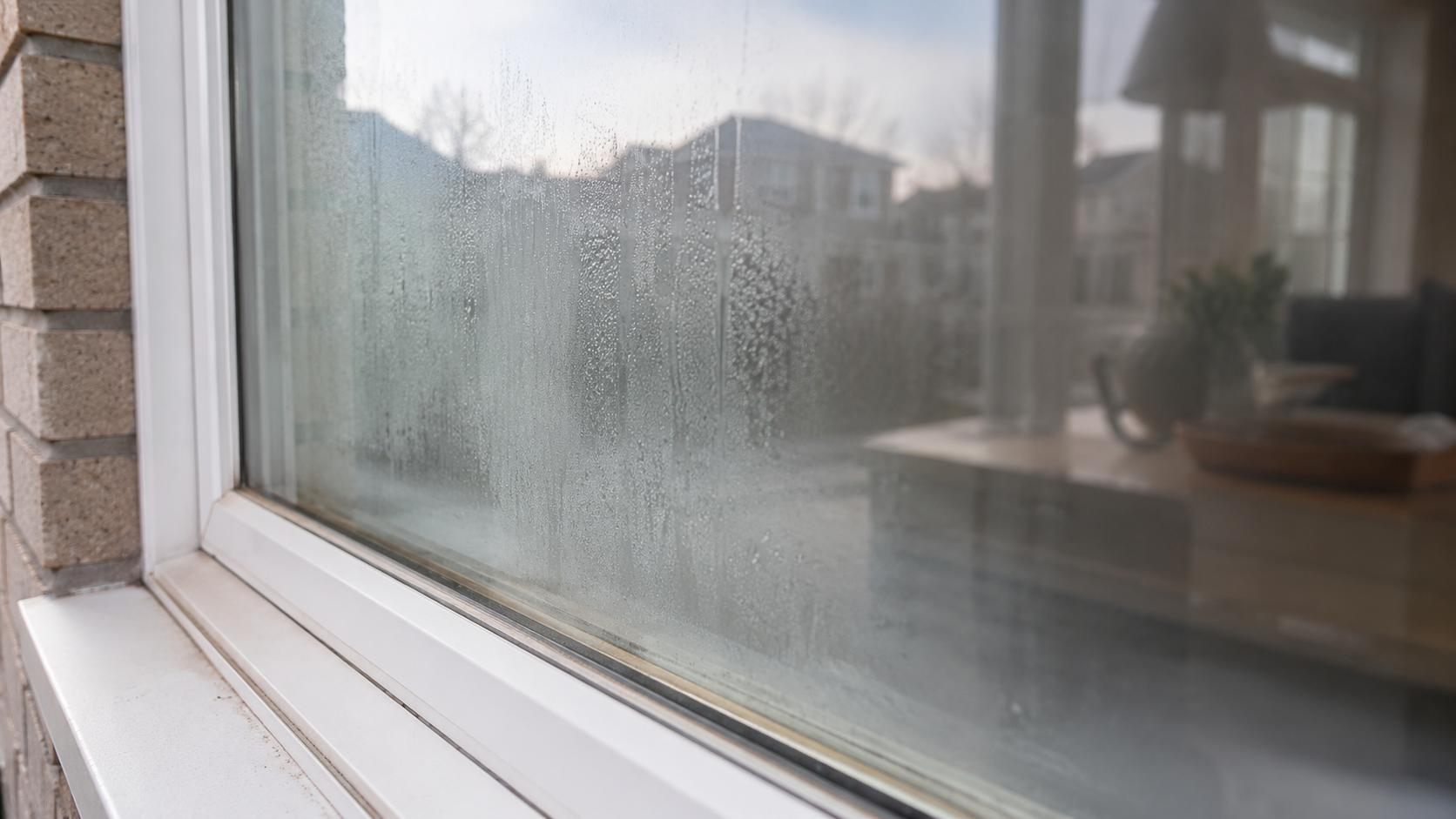
Every Toronto homeowner has seen it — foggy windows in winter, water droplets running down the glass, ice crystals forming on the inside. Window condensation is Toronto's most common window complaint, and it's usually NOT a sign your windows are broken. But sometimes it is. Here's how to tell the difference.
The 3 Types of Condensation
💧 Interior
(Inside Surface)
NormalHumidity problem. Your home is too moist for the temperature. Fixable without replacing windows.
💧 Exterior
(Outside Surface)
Good SignActually means your windows are WORKING — good insulation keeps interior heat from warming the outer pane.
💧 Between Panes
(Inside Sealed Unit)
Failed SealSeal has broken. Argon gas escaped. Window needs replacement. Not fixable.
Interior Condensation — The Humidity Problem

This is what 90% of Toronto homeowners experience. Warm, moist air inside meets cold glass and moisture condenses — same physics as a cold beer glass on a summer day. The fix is humidity control, not new windows.
Recommended indoor humidity by outdoor temperature:
| Outdoor Temp | Max Indoor Humidity | Toronto Context |
|---|---|---|
| -30°C and below | 15% | Extreme cold snap (rare, ~2-3 days/year) |
| -20°C to -30°C | 20% | January/February cold waves |
| -10°C to -20°C | 25% | Typical January |
| -10°C to 0°C | 35% | November, March |
| 0°C to 10°C | 40% | October, April |
| Above 10°C | 45-50% | Summer (condensation rare) |
7 ways to reduce indoor humidity in winter:
- Run bathroom fans during AND 30 minutes after showers. Most people turn them off too early.
- Use range hood when cooking. Boiling water adds 1-2 litres of moisture per hour to your home.
- Run your HRV/ERV. If you have one, set it to run continuously on low in winter. Many Toronto homeowners don't know they have one (check your basement mechanical room).
- Open a window 1 inch for 15 minutes daily. Quick air exchange drops humidity fast. Even at -20°C, this is the fastest fix.
- Don't dry clothes indoors. One load of laundry releases 2+ litres of moisture into your home.
- Check your humidifier setting. Furnace humidifiers set above 35% in winter guarantee condensation.
- Move plants away from windows. Plants transpire moisture — a window full of plants is a condensation factory.
Between-Pane Condensation — The Failed Seal
If you see fog or moisture BETWEEN the two panes of a double or triple-pane window that you can't wipe away from either side — the seal has failed. This means:
- The argon or krypton gas between panes has leaked out, replaced by humid air
- Insulation value has dropped 30-40% (higher heating bills)
- The fog will get worse over time as more moisture enters
- Eventually, mineral deposits from evaporating condensation will permanently stain the inner glass surfaces
How MANTLE Helps
We're window cleaners, not window installers — but we see condensation damage every day and can help:
- ✅ Clean first, diagnose second: 50%+ of "foggy" windows are actually just dirty. Our cleaning reveals whether it's dirt (fixable) or a failed seal (not fixable by cleaning).
- ✅ Mould removal on frames: We clean mould from window frames and sills caused by condensation — the visible surface mould that develops around persistently wet windows.
- ✅ Honest assessment: If we find failed seals, we'll tell you which windows need replacement so you can prioritize. We don't sell windows, so our advice is unbiased.
- ✅ Post-replacement cleaning: New windows come with construction film, sticker residue, and installation dust. We do post-installation cleaning to make them perfect.
Clean First. Diagnose Second.
50%+ of "foggy" windows are just dirty. Let's clean them and find out.
Get Free Estimate →Foggy Windows Guide · Cost Guide · Window Cleaning · All Posts